← Back to Journal
How to tell if a leather handbag is good quality
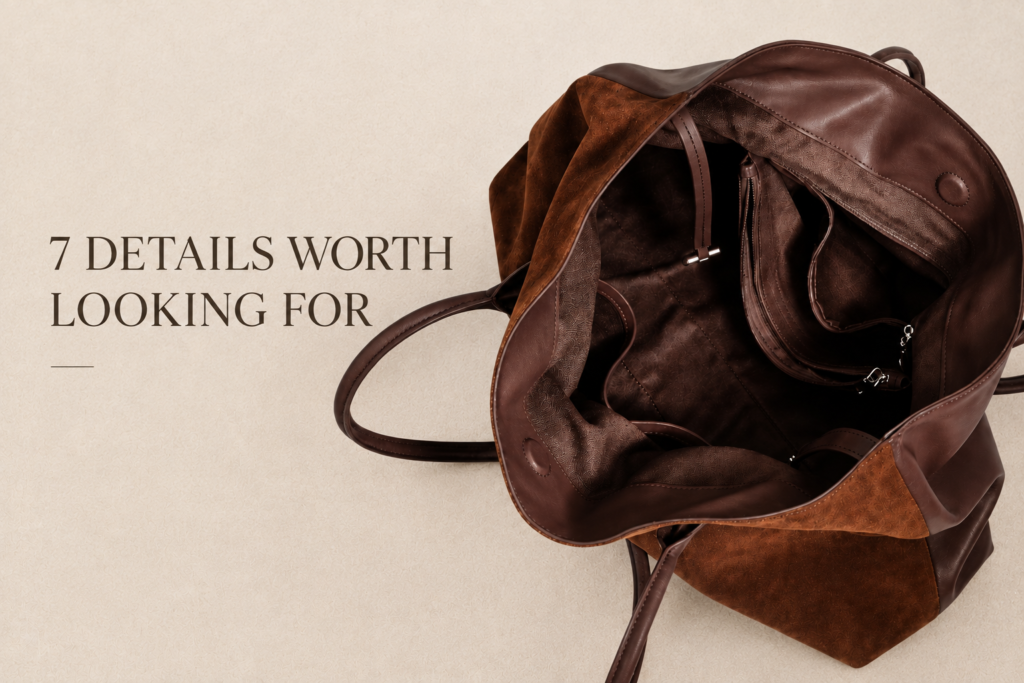
It is surprisingly difficult to judge the quality of a handbag from a photograph. A beautifully styled campaign, polished hardware and a convincing product description can make almost any bag look impressive online. It is usually only when you look a little closer or start using the bag, that the differences become apparent.
And price isn’t always the answer either. When we look at a handbag, there are a few details we tend to pay attention to. Some are obvious, while others are the sort of things you only start noticing after owning enough bags. Here are seven worth looking for.
Don’t judge the leather by appearance alone
Leather can look very different depending on how it has been treated and finished, so there isn’t one particular texture that automatically means “good quality”. Instead, look at how it feels and behaves.
Does it feel substantial in your hands, or unusually thin? Does the surface feel pleasant to touch? If the design is meant to be structured, does the leather support that shape? If it is intended to be softer, does it fall naturally?
Small variations in texture aren’t necessarily flaws either. Leather is a natural material, and different finishes will produce very different appearances. This is also why we wouldn’t judge a handbag purely by a label such as “genuine leather”. Knowing the material is useful, but it doesn’t tell you how thoughtfully the rest of the bag has been made.
Take a closer look at the stitching
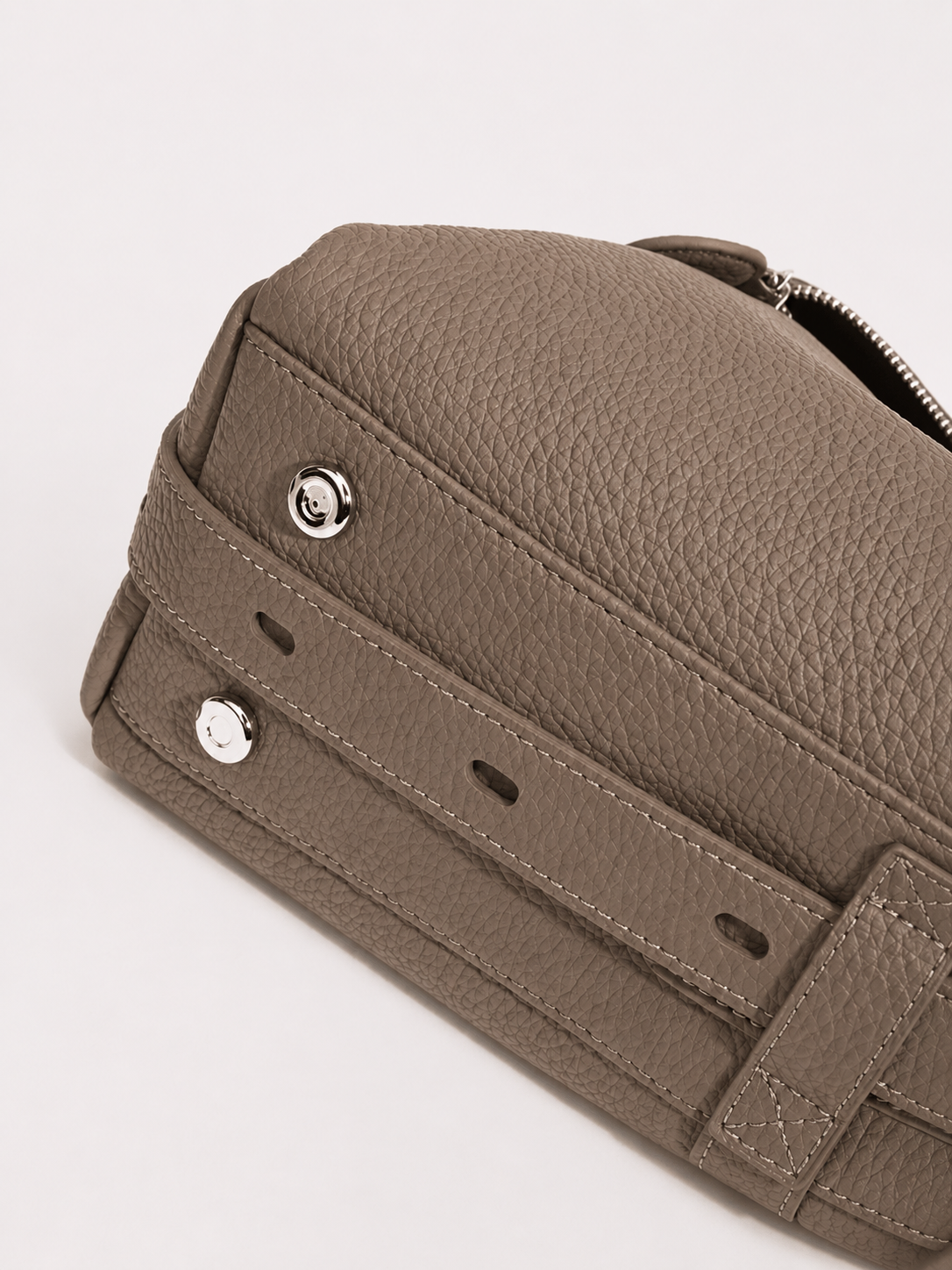
This is one of those things that is easy overlook until somebody points it out. Look along the handles, around the corners and where different pieces of the bag meet. The stitching should look neat and reasonably consistent, without loose threads or sections that appear carelessly finished. We pay particular attention to areas that will take more strain in everyday use, especially where handles and straps connect to the body of the bag. Perfectly straight stitching isn’t what makes a handbag beautiful, but careless construction tends to reveal itself in these smaller areas.
Open and close everything
If you’re looking at a handbag in person, actually use the hardware: Open the zip, close it, try the clasp, adjust the strap.
A zip that repeatedly catches may seem like a tiny annoyance in a shop, but imagine dealing with it every morning when you’re trying to get your keys out of your bag. Hardware doesn’t necessarily have to be heavy to be good. What matters more is whether it feels secure, functions smoothly and feels appropriate for the design. The same applies to closures. A beautiful closure isn’t particularly useful if opening your handbag becomes a daily battle.
Look at the parts people don’t usually photograph
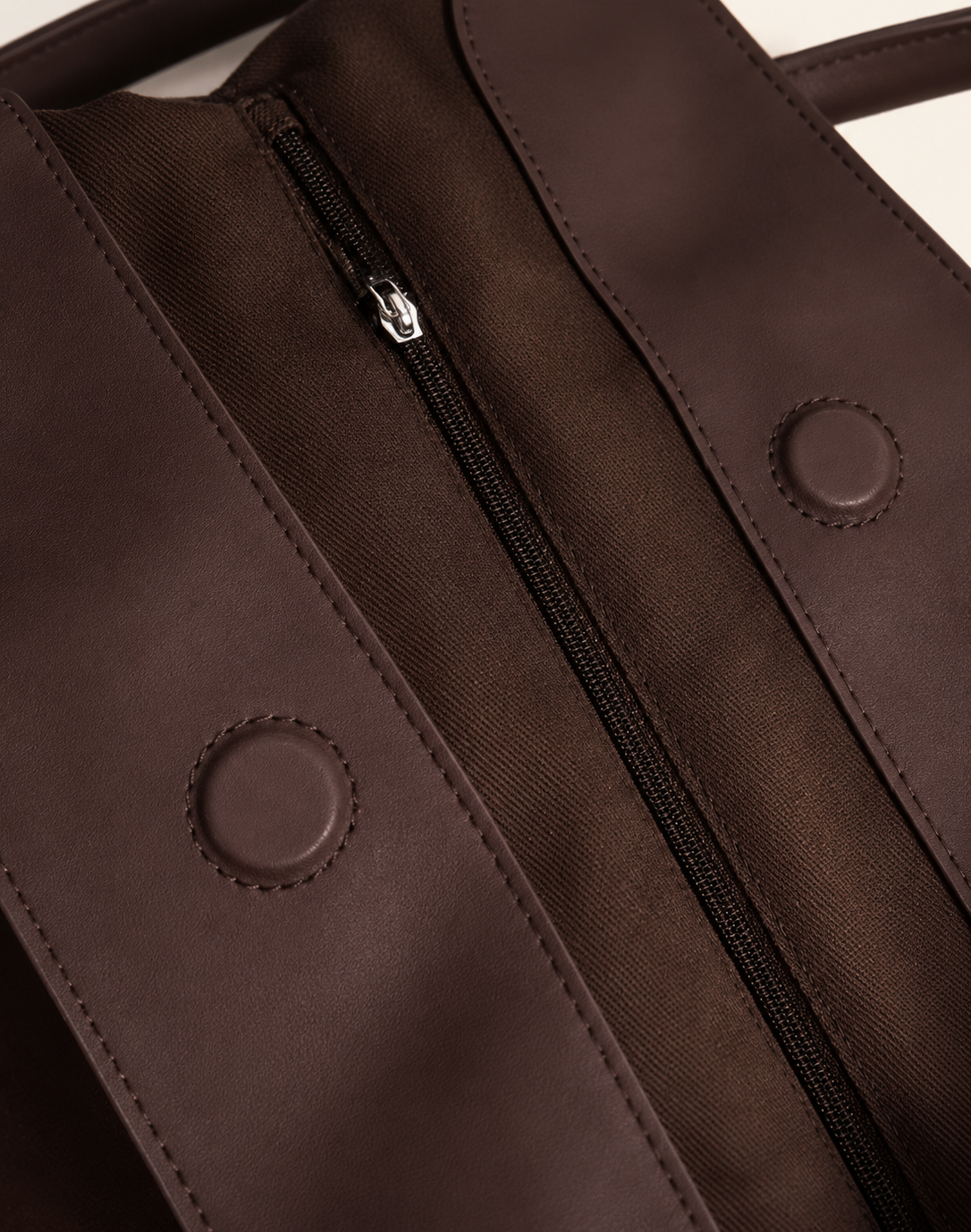
Product photographs naturally show a handbag from its most flattering angles. So look at the other ones too. Check the bottom, look at the corners, turn the bag around, look closely at the edges of the straps and handles. Depending on the construction, leather edges may be painted, folded or finished in different ways. What you’re looking for is care: edges that appear clean and deliberate rather than roughly or inconsistently finished.
These aren’t necessarily the details you’ll notice when you first see a bag across the room. They’re often the ones you notice after living with it for a while.
Don’t forget the inside
We think the inside of a handbag deserves almost as much attention as the outside. A lining should feel properly fitted and secure. Interior seams shouldn’t look as though they were an afterthought. But this is also where we start thinking beyond craftsmanship and about whether the bag is actually pleasant to use. Where will your phone go? Is there somewhere sensible for your keys? Can you reach the pockets easily? Will everything simply collect at the bottom? For an everyday handbag, these questions matter. There is little point owning a beautiful bag if finding your cardholder requires emptying half its contents onto a café table.
Put the bag down
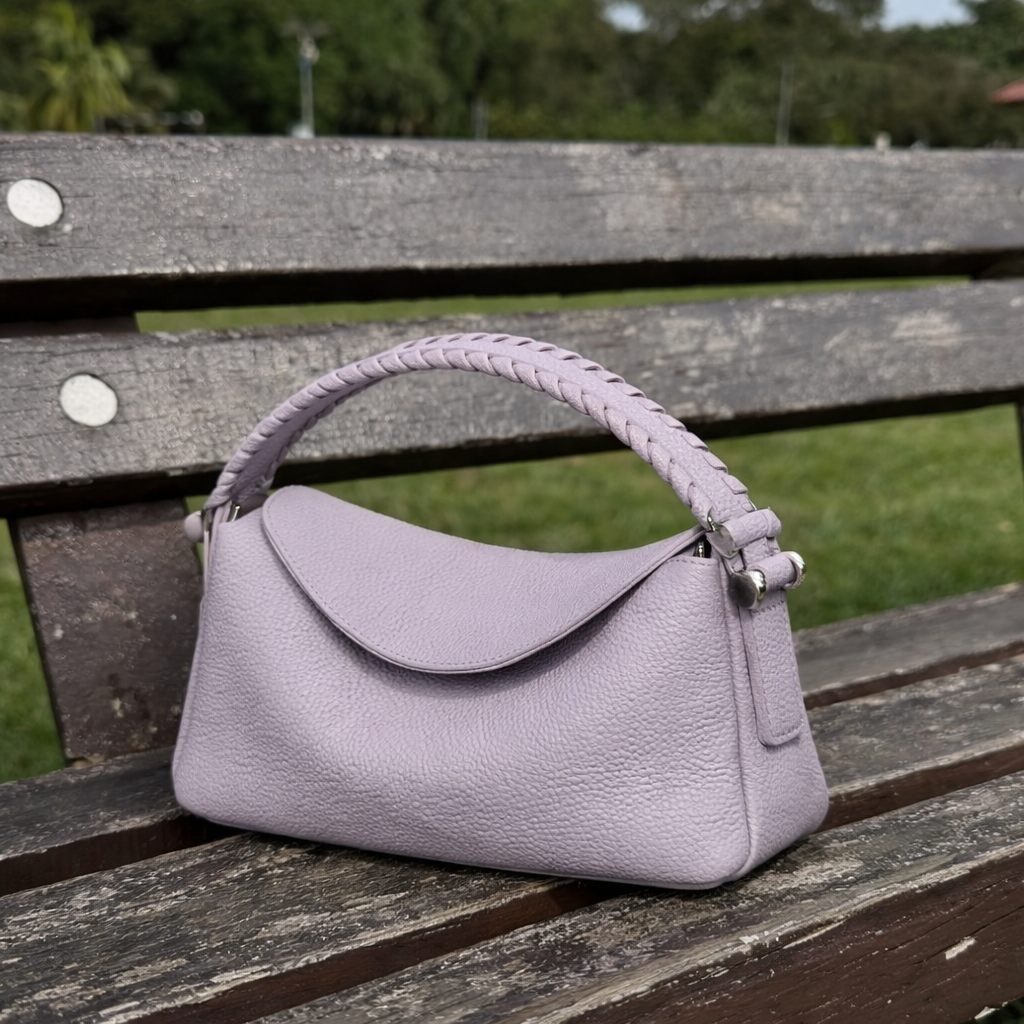
This sounds almost too simple, but it is something we have learned to pay attention to.
Take a structured handbag, empty it completely and place it on a flat surface. Does it hold its shape? Does it sit evenly? Look at it from the front and from the side. Pay attention to the base, the structure of the body and how the handles fall when there is nothing inside supporting them.
Two handbags can look remarkably similar at first glance, yet feel very different once you handle them. Small differences in the material and construction can affect how structured a bag feels and how well it maintains its intended silhouette.
For a bag designed to be structured, we like to see that structure remain even when the bag is empty. It is one of those details that may not be immediately obvious in a photograph, but becomes much more noticeable when you use the bag in person.
Of course, this isn’t a rule for every handbag. A soft hobo or slouchy shoulder bag is supposed to relax when it is put down. The point is to ask whether the bag behaves the way its design was intended to.
Imagine it six months from now
This may be the most useful test of all.
Instead of only asking whether you like the bag today, imagine actually living with it. Think about what you normally carry. Perhaps a phone, wallet, keys, makeup, tissues, notebook, and for work maybe a laptop. Where will the weight sit? Which parts of the bag will you touch constantly? Will the opening still be convenient when the bag is full? Are the handles comfortable enough for the way you intend to carry it?
A handbag doesn’t spend its life sitting perfectly arranged on a shelf. It gets put on floors, squeezed beside you in the train, carried through airports, opened with one hand and filled with things you hadn’t planned to bring.
That real life matters.
So, what actually makes a handbag good quality?
There isn’t one answer.
Beautiful leather can’t compensate for frustrating hardware. Perfect stitching can’t make an impractical bag enjoyable to carry. And an expensive price tag doesn’t automatically guarantee either.
We tend to think of quality as a combination of material, construction and thoughtfulness.
Look at the obvious things, certainly. But look at the less glamorous parts too – the corners, the lining, the underside of the handles, the way the zip moves and how the bag feels once there is actually something inside it.
Those quieter details often tell you far more about a handbag than the logo on the front.
Explore the Porta Belle collection and discover a bag that fits naturally into your everyday.